Tax Season Guide for Creators
Author: Natasha Valerie
If you earn money from brand deals, sponsorships, affiliate links, or social media content, you may be wondering how taxes work for creators.
Navigating taxes an influencer can feel overwhelming, especially if this is your first time receiving a 1099 form or filing as an independent contractor.
This guide walks you through how taxes work as a creator, what forms you may receive, what expenses you can track, and how to prepare throughout the year so tax season doesn’t catch you off guard.
Disclaimer: This guide is for general informational purposes only and should not be considered tax advice. Tax situations vary widely. Please consult a qualified tax professional for guidance specific to your situation.
How Taxes Work as a Creator
Unlike traditional jobs, influencers and content creators are typically considered self-employed, which means taxes are not automatically withheld from your income and you’re responsible for reporting and paying them yourself.
Before we dive in, there are two tax forms that you need to understand:
📄 W-9: Form You Fill Out
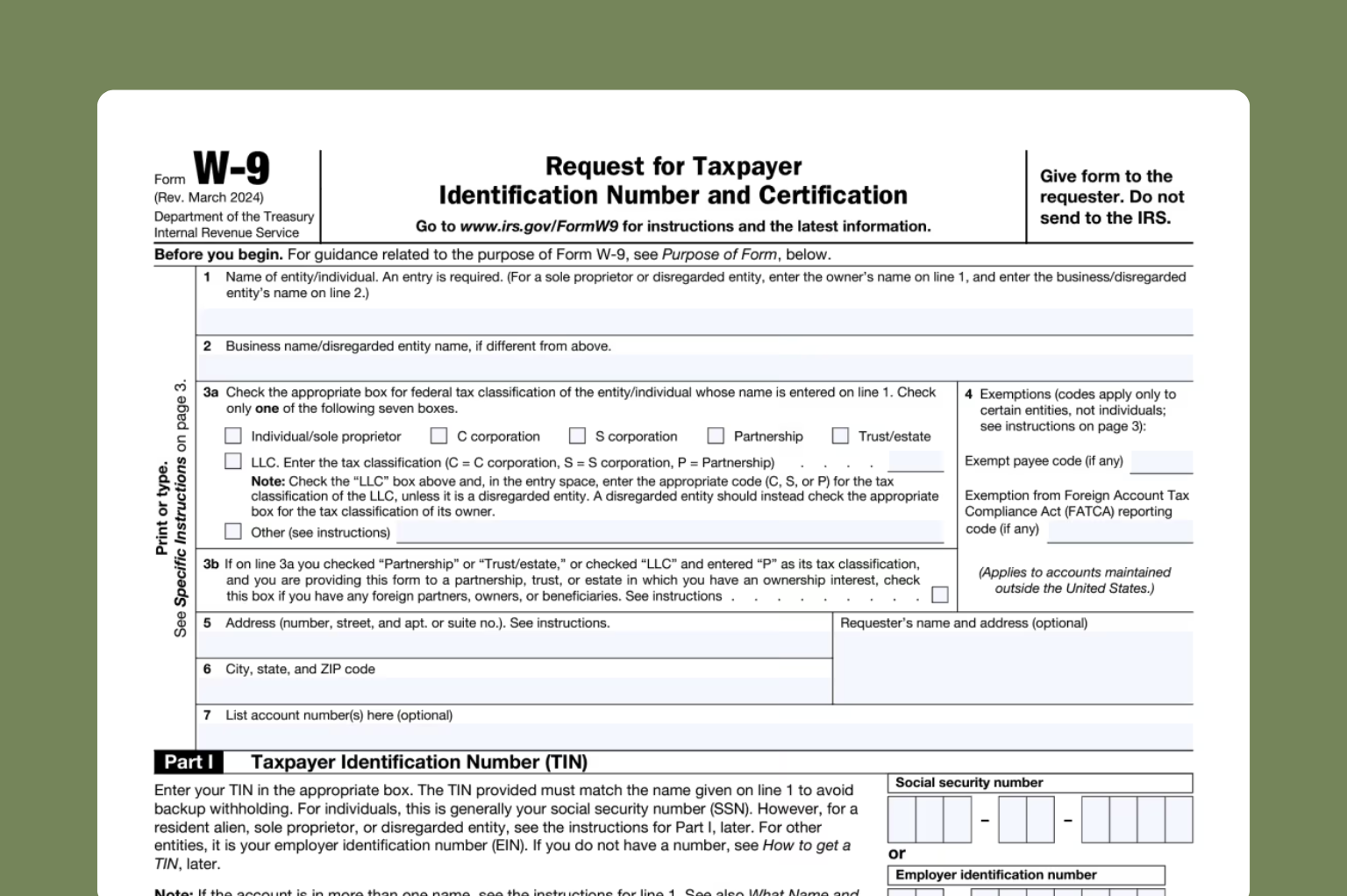
A W-9 is a form you complete and send to a company that pays you. It provides your tax information (name, address, SSN/EIN) so they (or us!) can report your earnings correctly.
✢ You fill this out and send it to your partner(s) or agency rep.
✢ This form is informational only and does NOT report income or withhold taxes.
📄 1099: Form You Receive
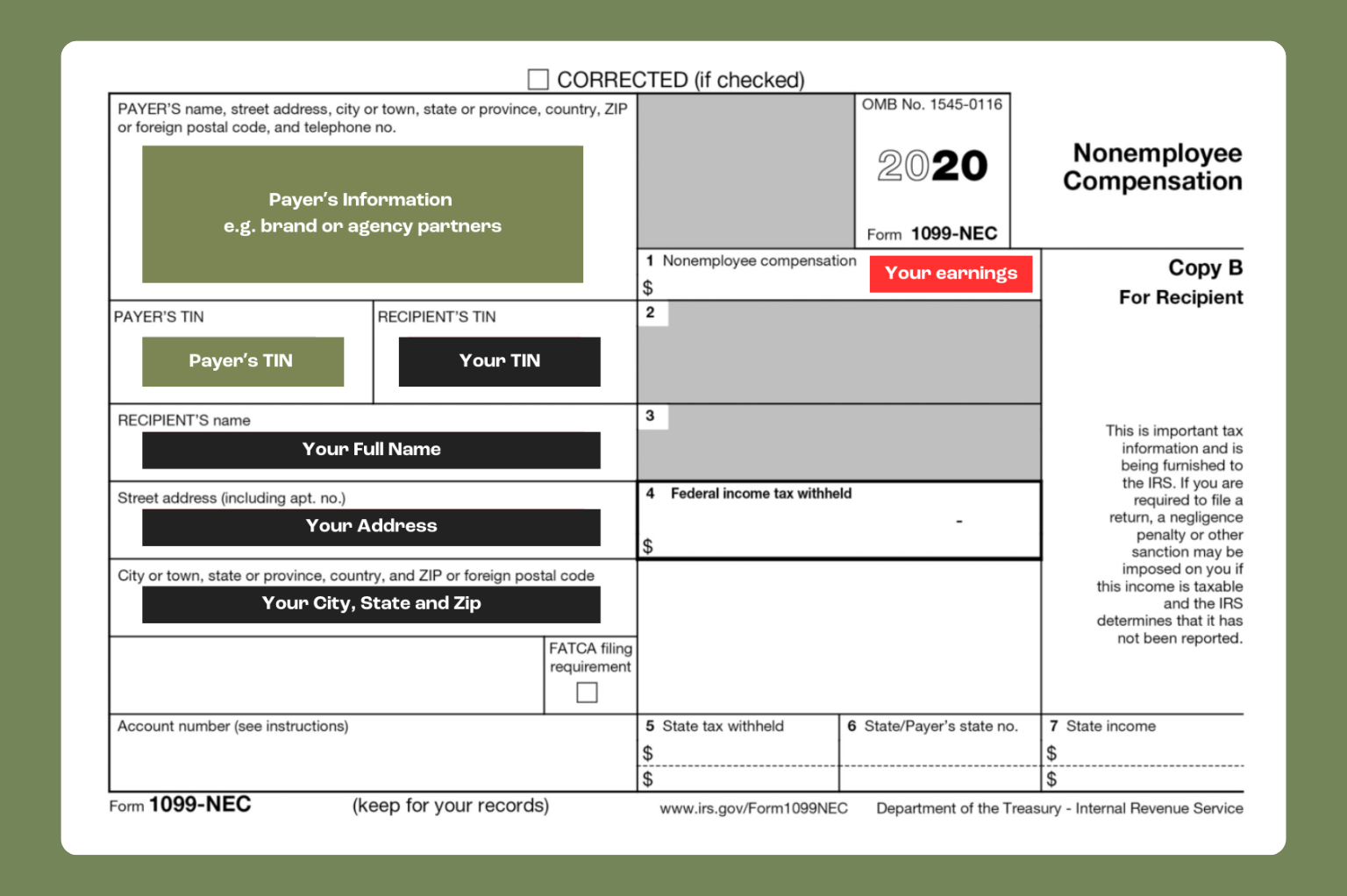
A 1099 is a tax form you receive (usually at the end of January or early February) if you earned $600 or more from a company during the previous year.
It shows how much you were paid and is used when filing your taxes.
✢ You receive this form from your partner(s).
✢ It reports your income to both you and the IRS.
📌 What To Do With Your 1099:
When you receive your 1099 form, use the amount shown (in the Nonemployee compensation box) to report your creator income when filing your taxes.
Tips for Creators
✢ Set Aside Money for Taxes
Since taxes are not withheld from your payments, it’s important to set aside money from your brand deal payments throughout the year.
A common guideline is to save 20-30% of each payment* for taxes.
This way, when tax season arrives and your 1099 shows your total earnings, you’re prepared, not surprised.
*Your actual tax rate may vary depending on your income, state, and deductions.
✢ Make Quarterly Tax Payments
Self-employed individuals often need to pay taxes throughout the year using quarterly estimated payments. This helps you avoid penalties and a large lump sum during tax season.
Typical IRS deadlines:
April 15
June 15
September 15
January 15 (following year)
If you expect to owe a large amount in taxes, paying quarterly is strongly recommended.
✢ Keep Track of Deductions
One advantage of being self-employed is that you can deduct legitimate business expenses, which lowers your taxable income.
Some commonly overlooked creator deductions include:
Equipment and gears for content (tripods, cameras, tablets, storage devices, etc)
Props used in content
Portion of your phone bill or internet costs used for work
Editing apps and subscriptions (Canva Pro, Cloud storage, etc)
Creator tools (social media scheduling, link-in-bio, email marketing tools, etc)
PO box or mailing supplies
Giveaways or investments used for audience growth
Travel and work-related expenses (flights, hotel, meals during travel, event tickets, etc)
If it directly supports your content creation business, it may be deductible. Always keep receipts and note the business purpose.

✢ Other Helpful Tips to Make Tax Season Easier
Open a separate bank account for creator income and expenses
Keeping your creator finances separate from personal spending makes it much easier to track earnings, categorize expenses, and avoid confusion later. It also helps if you ever need to show proof of business activity.Save receipts throughout the year
Don’t rely on your memory. Take photos of physical receipts or save digital ones as soon as you make a purchase so nothing gets lost. Organized records make it easier to claim deductions and support them if needed.Use a spreadsheet or expense-tracking app
Regularly logging your income and expenses helps you understand your profitability and estimate taxes owed. Even a simple monthly tracker can save hours of stress during tax season.Tip: Notion Marketplace offers free income and expense tracking templates that are perfect for creators just getting started.
Don’t wait until April to figure everything out
Trying to reconstruct an entire year of finances at the last minute is overwhelming and error-prone. Checking in monthly or quarterly keeps everything manageable and reduces surprises when filing.
✢ When in doubt, ask a tax professional
Tax rules can vary based on your income, location, and business structure. A qualified professional can help you maximize deductions, avoid mistakes, and ensure everything is filed correctly.
Tax season doesn’t have to be overwhelming. With a little preparation throughout the year, managing your finances as a creator becomes much easier. Remember, building a sustainable creator career isn’t just about growing your audience — it’s also about building strong business habits behind the scenes.
If you need support, resources, or guidance, our team is always here to help. 💚